


Halide perovskites have garnered significant attention in light-harvesting and light-emitting technologies due to their advantageous characteristics such as facile fabrication, large absorption coefficients, and excellent carrier transport properties. Among them, two-dimensional (2D) halide perovskites inherit the outstanding optical properties of their three-dimensional counterparts and exhibit superior chemical stability attributed to the hydrophobicity of large organic cations, making them ideal candidates for high-efficiency light-emitting devices. In particular, 2D lead bromide perovskites have received increasing attention for their broadband white-light emission and high photoluminescence quantum yield (PLQY), serving as single-emitting materials in white-light emitting diodes (w-LEDs) and eliminating the need for additional phosphors typically used in conventional w-LEDs. This is enabled by strong short-range Holstein electron-phonon coupling, which simplifies the architecture of w-LEDs by avoiding efficiency losses and spectral mismatches inherent to traditional multi-phosphor systems.
Nevertheless, the ionic nature of 2D halide perovskites and the weak noncovalent interactions between their organic and inorganic components result in a soft lattice and dynamic structural disorder. This complexity hinders our understanding of electron-phonon coupling and the behavior of self-trapped excitons (STEs) in these materials. As a result, how structural distortions regulate electron-phonon coupling strength and STE emission remains a subject of intense scientific debate.
Recently, Prof. LIU Xinfeng from the National Center for Nanoscience and Technology published a research paper titled " Regulating Pb off-centering distortion for white-light emission in 2D halide perovskites" in Nature Communications. The work systematically clarifies the intrinsic correlation between structural distortion and self-trapped exciton emission, providing critical theoretical support and technical guidance for the material design and performance optimization of next-generation white-light emitting diodes (w-LEDs).
The research team innovatively selected a series of two-dimensional lead bromide perovskites ((R-NH₃)₂PbBr₄, where R represents C3-C6 cyclic carbon chains) with the same structural type but cyclic organic cations of different ring sizes as the research objects. By precisely regulating the steric hindrance effect of organic cations, they systematically investigated the influence of structural distortion on luminescent properties. The study found that with the increase in the ring size of cyclic organic cations, the relative STE emission intensity and phonon coherence intensity are significantly enhanced due to the strengthened electron-phonon coupling strength. This enhanced STE emission is closely correlated with the Jahn-Teller distortion induced by Pb off-center displacement, rather than the octahedral tilting distortion. Furthermore, density functional theory (DFT) calculations show that the enhanced Jahn-Teller distortion leads to an increase in exciton self-trapping energy and Stokes shift. Our research results provide fresh insights into understanding the correlation between structural distortion and STE emission properties, which not only holds important fundamental research significance but also has great value for guiding the design and optimization of perovskite-based single-emitter w-LEDs.
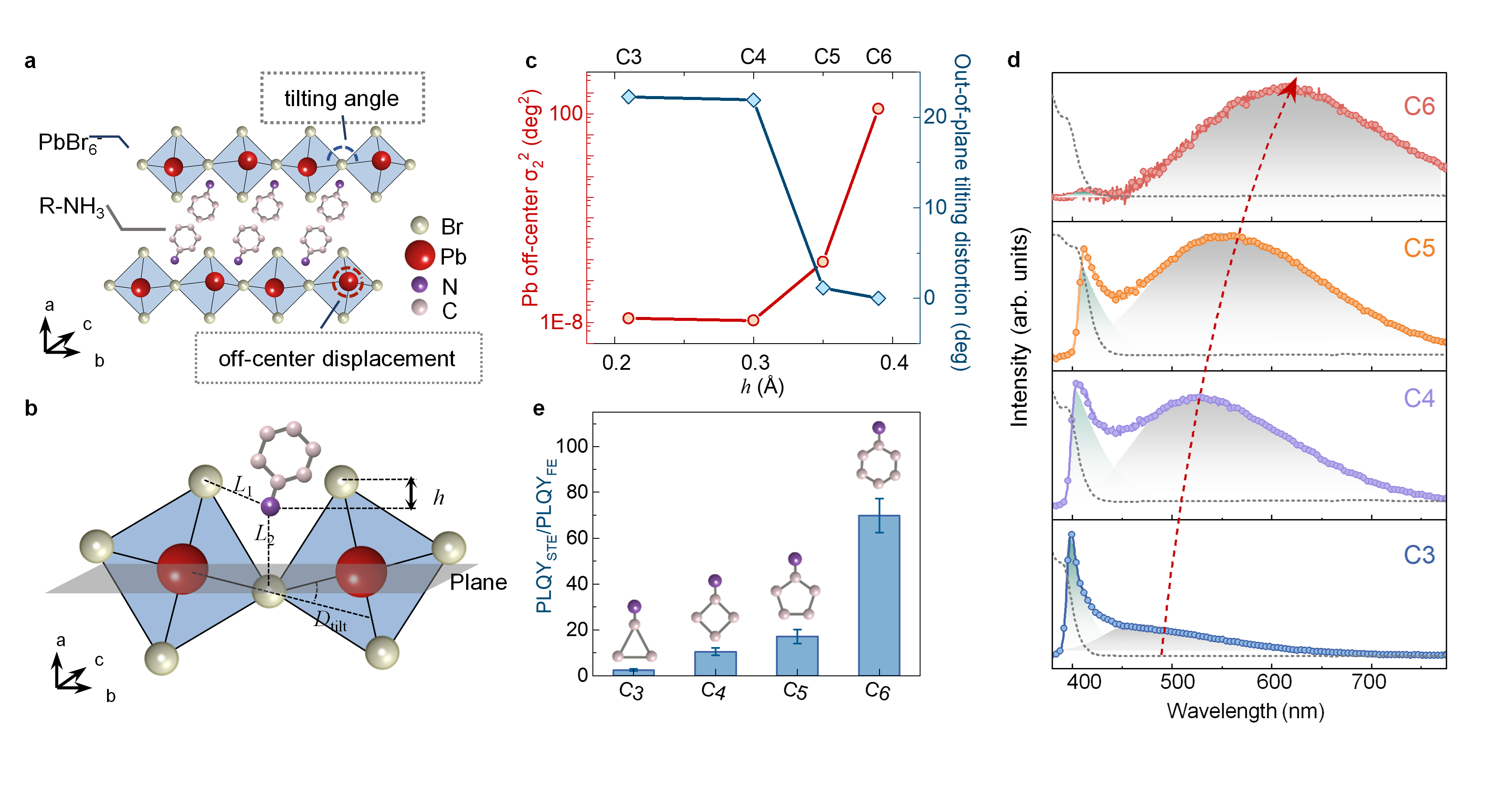
Figure 1. Cyclic organic cation-dependent self-trapped exciton luminescence in two-dimensional halide perovskites (Image by LIU Xinfeng et al)
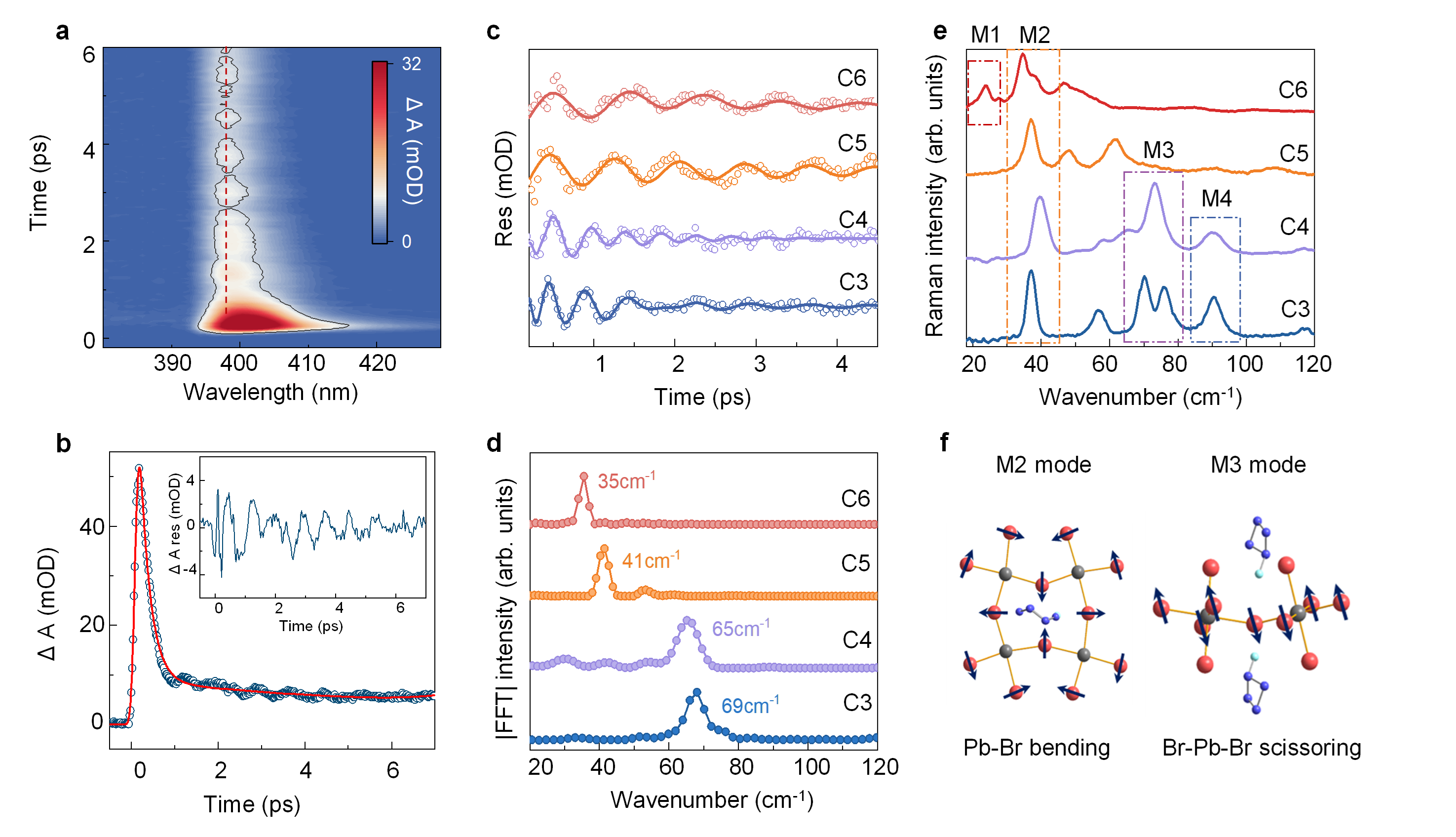
Figure 2. Coherent Phonon Dynamics in Cyclic Organic Ligand Perovskites (Image by LIU Xinfeng et al)
Contact: LIU Xinfeng
National Center for Nanoscience and Technology (NCNST)
E-mail: liuxf@nanoctr.cn

